Project 1 · Quantum ML · QLSTM-Transformer
Anomaly Detection
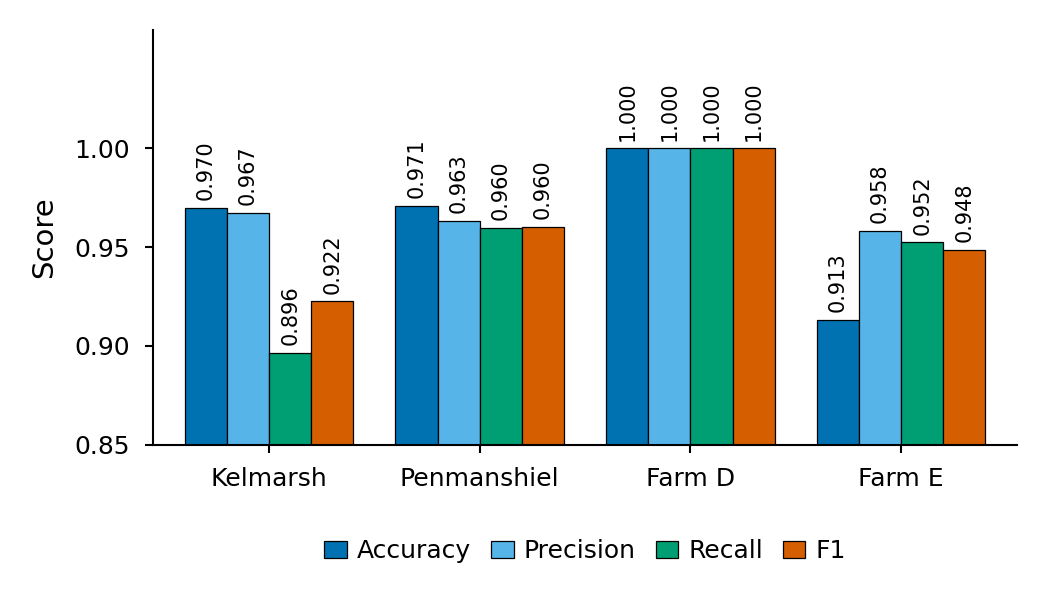
gearbox bearing, no false alarms
pitch system
QLSTM, ICAC 2025
Monitor, Detect and anticipate, and Respond
We develop data-driven machine learning methods that combine wind turbines' operating data with physics-based constraints to detect and diagnose faults early, predict failures, and make informed decisions about how turbines should operate.
Our researchWind turbines operate for decades in turbulent wind, ice and salt spray. Component degradation develops over weeks to months before it ends in a sudden, costly stoppage, often offshore or on a remote ridge where repairs need cranes, vessels and weather windows. Every turbine already records its own behaviour through SCADA. The open question is how to turn that record into early, trustworthy and actionable knowledge.
Our aim is condition monitoring that explains why a turbine behaves as it does, predicts what happens next, and evaluates what would happen if it were operated differently.
Variational quantum circuits for energy and power systems, capturing high-order interactions among turbine variables with few parameters.
Spotting abnormal turbine behaviour early from routine SCADA data, without labelled faults.
Locating which component is failing and tracing how the fault propagates through the turbine.
Estimating how likely a component is to fail over the coming weeks, with calibrated probabilities.
Learning how turbines respond to operator commands, so that monitoring can run and decide on its own.
AI and digital twin solutions for the operation of renewable-rich power networks.
Energy, cost and risk: the autonomous power-limit policy replayed through the world model over recorded operation and compared with what the farm actually did (offline estimate). Decision study
TurbineCore is an autonomous condition monitoring system. Every day, for every turbine, it reads the machine's own SCADA record, works out how healthy it is, and decides how hard it should be allowed to run, without an engineer in the analysis loop. A world model shared across five wind farms forecasts every channel under a given operator command; on top of it the system detects anomalies, names the faulty component, estimates failure probability over the coming weeks, writes the day up, and learns a power-limit policy that trades energy against failure risk.
Explore TurbineCore Live demoThe demo is password-protected while the related paper is under peer review. Contact us for access.
New Engineering Building
Lancaster University, Gillow Ave, Bailrigg
Lancaster LA1 4YW, United Kingdom
Tel: +44 (0)1524 593700
Mon – Fri, 9:00 – 17:00