Our first priority is quantum machine learning for energy systems: variational quantum circuits that model the coupled, nonlinear behaviour of wind turbines with few parameters. Built on these models, our work follows the life of a fault: noticing that a turbine has stopped behaving normally, finding which component is responsible, estimating how long it has left, and choosing how the turbine should be operated in the meantime.
Methods are developed and validated on real SCADA data from operational wind farms, with leakage-free evaluation across turbines and farms.
Quantum ML · QLSTM · QLSTM-Transformer
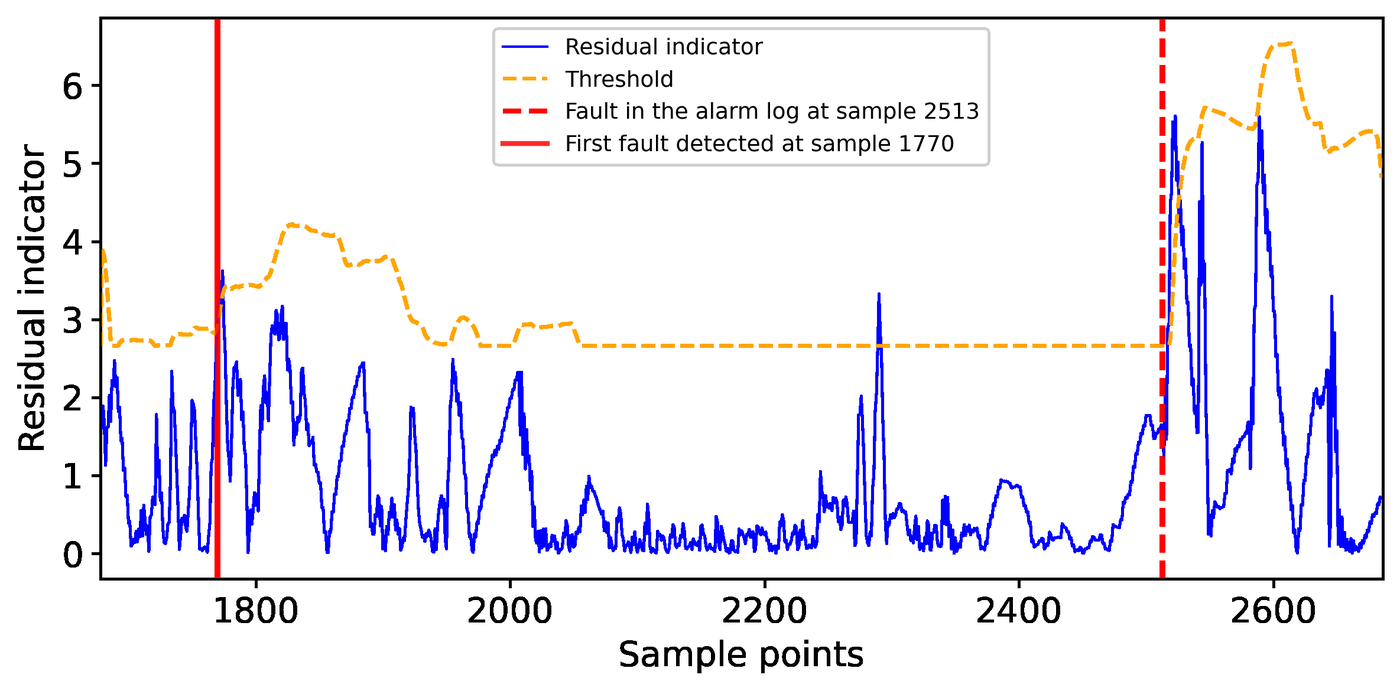
Anomaly Detection
Quantum normal behaviour models that warn up to 123.8 hours before shutdown with no false alarms.
Quantum-enhanced digital twin · physics graphs
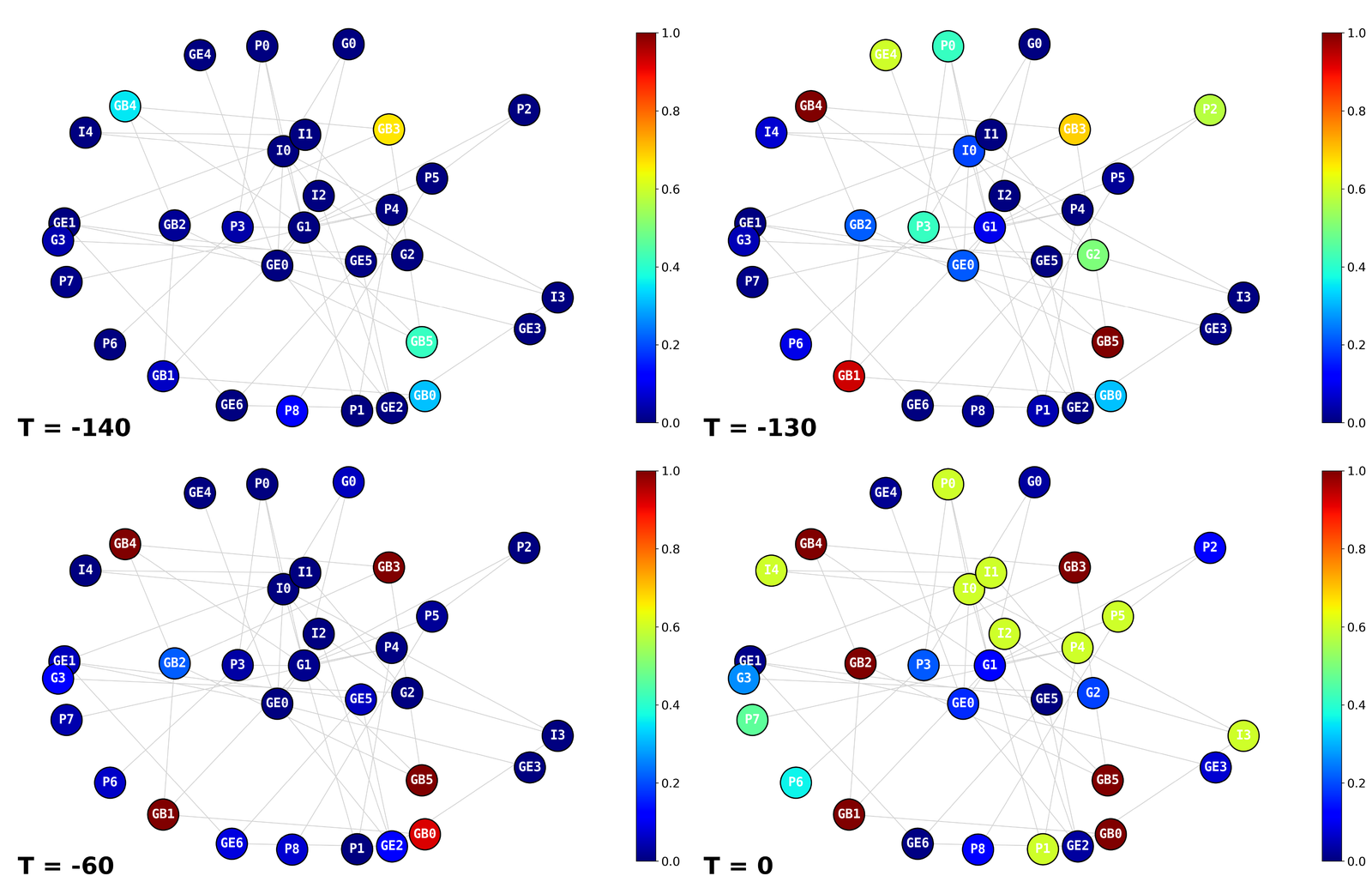
Fault Diagnosis & Root Cause
99.57% diagnosis accuracy, plus variable-level tracing of where a fault started and how it spread.
World models · decisions
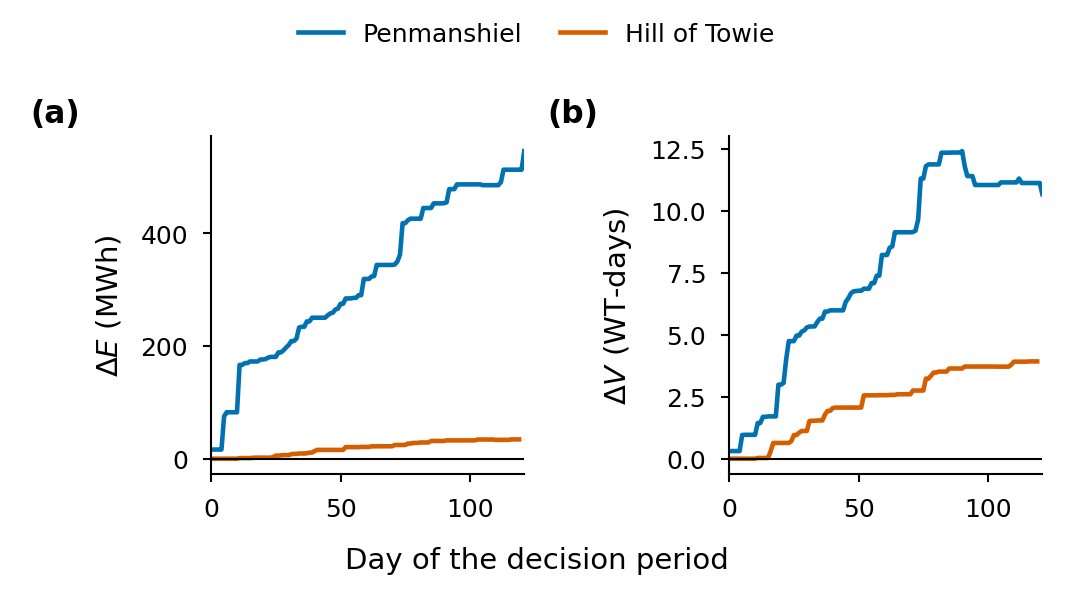
TurbineCore
Autonomous condition monitoring: one world model across five wind farms, from health assessment to the day's power limit.
Research Themes
Theme 1
Quantum Machine Learning for Energy
We study how quantum and quantum-inspired models, built on variational quantum circuits, can model the coupled nonlinear dynamics of wind turbines, including how the number of input variables maps to the number of qubits required. Our quantum LSTM and quantum LSTM-Transformer networks are the normal behaviour models behind our anomaly detection results, and a quantum-enhanced digital twin supports our fault diagnosis and root-cause tracing.
ResultsTheme 2
Anomaly Detection
Normal behaviour models learn how a healthy turbine relates wind, power, temperatures and commands. The residual between what the model expects and what the turbine reports becomes an anomaly score, and adaptive thresholds (for example Bayesian inference over a sliding window) decide when a deviation is worth acting on. Our models include quantum LSTM and quantum-inspired LSTM-Transformer networks.
ResultsTheme 3
Fault Diagnosis & Root Cause
An abnormal reading is usually a symptom, not the cause. We treat diagnosis as physics-constrained spatio-temporal reasoning: a prior graph built from the turbine’s physical coupling chains is combined with learned temporal representations, giving both system-level fault classification and variable-level root-cause tracing.
ResultsTheme 4
Prognosis & Remaining Useful Life
From the same health evidence we estimate failure probability over horizons of days to weeks and remaining useful life, recalibrated against recorded failures so that a stated probability can be trusted in maintenance planning.
ResultsTheme 5
World Models & Autonomous Operation
An action-conditioned world model, shared across wind farms with different sensors and naming, forecasts every channel with an uncertainty band under a given control set-point. Counterfactual queries (“what if this turbine were limited to 1.6 MW tomorrow?”) feed pessimistic offline planning that trades energy against failure risk. Together they let condition monitoring run autonomously, from raw data to an operating decision, with people confirming facts and authorising actions.
ResultsCross-cutting
Smart Grids & Digital Twins
Beyond individual turbines, the group works on modelling, optimisation and control of smart and micro grids, renewable energy integration, and autonomous operation of power networks.